The bells above Grauwall
Work, crossings and the sound of a city
Grauwall is built through water, crossings and collective signals. Its bells matter because the city beneath them must keep moving.
← All world notes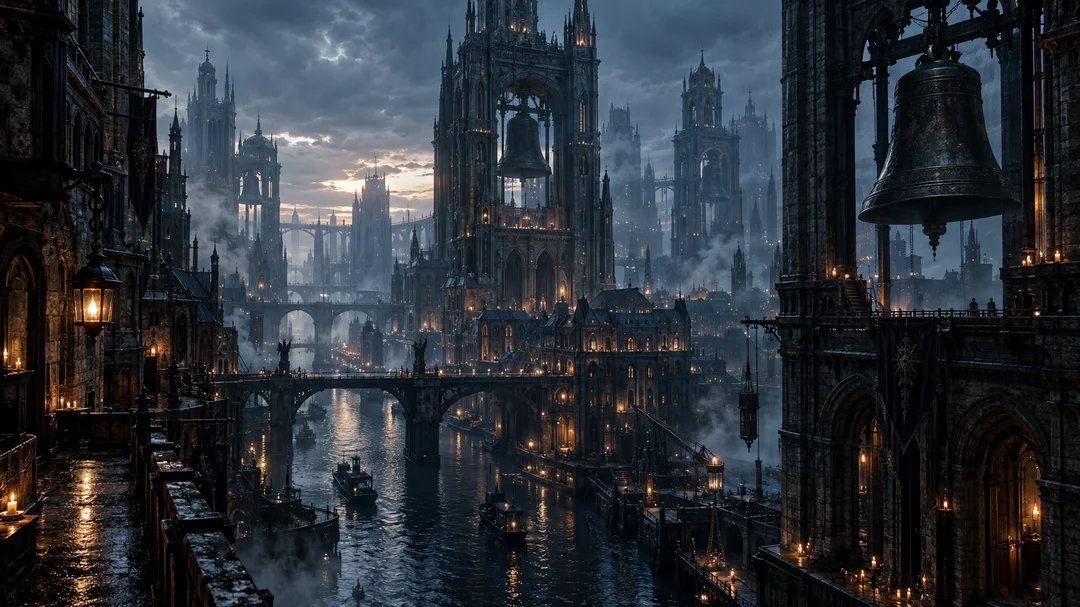
A city that cannot ignore water
In Graufeld, the Veld and its waterways organize daily life before a traveler ever reaches the city gates. Roads, quays and crossings are not decorative scenery. They decide where carts arrive, where a boat can unload and where a fee may be collected. The old bridge associated with Harven belongs to this system of movement and obligation.
Grauwall emerges where these crossings meet. It must be understood from the muddy approaches and working banks as much as from its towers.
What a bell can tell
Grauwall is known for its bells. A bell can mark time, summon attention or make an obligation public. The sound travels farther than the person who rings it. That makes bronze part of civic life rather than a simple ornament on a skyline.
The detail matters when designing the city: a bell needs a foundry, lifting equipment, maintenance, access stairs and people who understand its weight. A convincing image should show the labour that lets a monument speak.
Keep the districts distinct
The city's upper and lower districts can be explored as architectural design studies, but an illustration is not proof of every historical street or institution. Waterlogged lower passages and elevated administrative streets are useful visual readings, not permission to invent a new event in the novel.
To follow Grauwall, move from water to crossings, then to bells. The question is not only who rules the city. It is who works so the city can function when the bells are silent.