Names cast in bronze
The Koru coast and the work of remembering
On the Koru coast, bronze masks and the keeping of names connect craft to remembrance. Obarem is more than a picturesque harbor.
← All world notes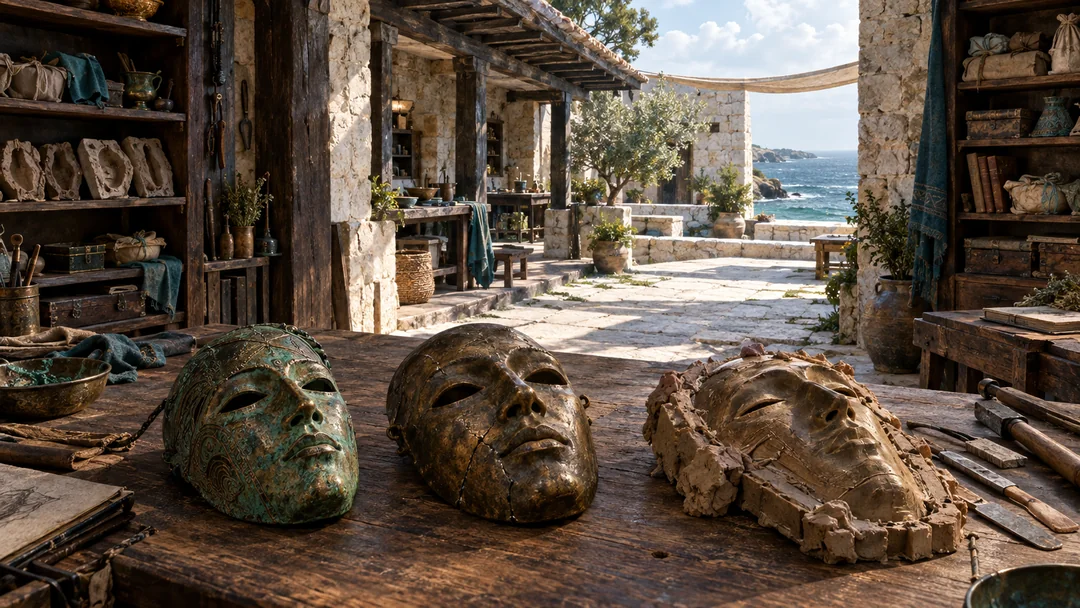
The material keeps its scars
Salt wind changes bronze. It leaves patina, dull edges and marks where a hand has polished the same place for years. On the Koru coast, that material history is central to the visual identity. A mask can bear a face without pretending to preserve a person intact.
The Koru are associated with masks, cast objects and names carried through tradition. This is a culture of skilled making, not an interchangeable shore of castles and merchants.
Why the workshop matters
Obarem is a useful place to begin. Look for clay molds, hand tools, casting traces, stored objects and sheltered places where metal can be worked despite sea air. The meaning of a mask is inseparable from the time required to create and maintain it.
A monumental wall of identical faces might look dramatic, but it erases the individual lives the archive is meant to suggest. Small differences in wear, repairs and proportion speak more clearly.
Two stories, one coastline
The novel introduces a traveler associated with Obarem and the masks she carries. A website may explain this public cultural background while protecting later revelations. The action RPG shares the world but not the novel's plot.
Follow the coast through practical questions: where is bronze worked, where do vessels make landfall, what objects can outlast a name? In MYRHA, memory has a material weight.